Threat Detection and Hunting

Find what others miss before it becomes a breach
Stages this advances
Highlighted stages are where this capability does the work.
Define the exposure surface that matters to the business.
Continuously inventory assets, identities and exposures.
Rank by exploitability and business impact, not CVSS alone.
Prove which exposures are actually exploitable.
Drive owners, SLAs and evidence to closure.
Discovery
Continuously inventory assets, identities and exposures.
Merge external attack surface, cloud, identity and vulnerability telemetry into one deduplicated exposure graph.
Prioritization
Rank by exploitability and business impact, not CVSS alone.
Threat intelligence, reachability and asset criticality collapse millions of findings into the few hundred that move risk.
Validation
Prove which exposures are actually exploitable.
Attack path analysis and safe simulation confirm whether a finding is reachable and whether controls stop it.
Structured Execution Workflow
End-to-end continuous exposure lifecycle mapping adversary actions into validated defensive posture.
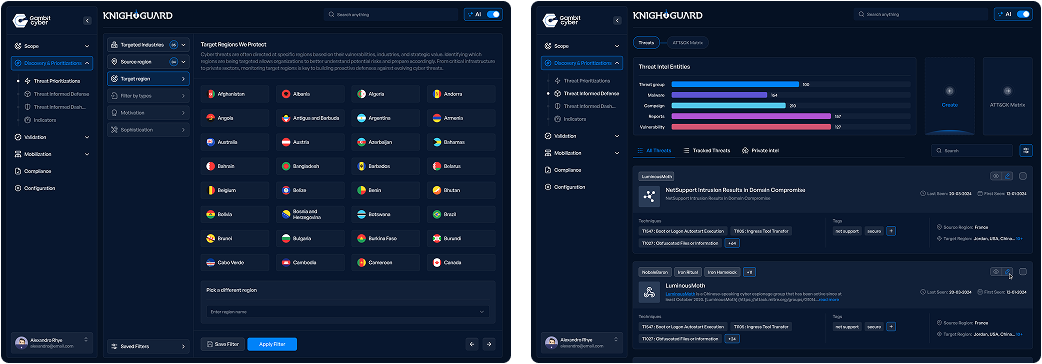
01. Threat Prioritization
Identify and prioritize threats based on threat intelligence, risk appetite, industry relevance, and recent attacker activity (e.g., MITRE ATT&CK techniques). This ensures detection efforts align with real-world risks. Gambit Cyber provides a rich feature for Threat Prioritization based on multiple filtering criteria including industry standard GIR Framework.
02. Threat Modelling and Hypothesis Building
Map out how an attacker would exploit a specific weakness or move through your environment using TTPs. Develop hypotheses for what adversary behavior would look like in logs or telemetry. Use our AI Enabled Threat Scenario generator to quickly generate Threat Scenarios based on your hypothesis.
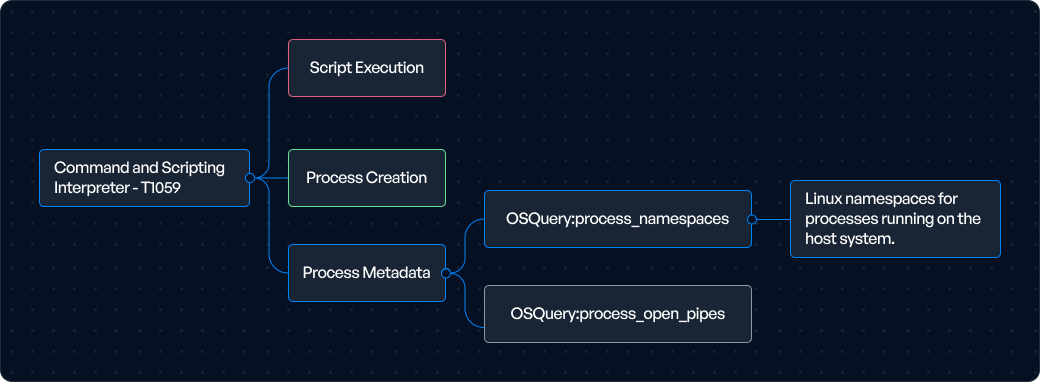
03. Detection Logic Design
Translate hypotheses into actionable detection rules. This includes defining log sources, matching patterns, and crafting queries or rules (e.g., Sigma, KQL, Splunk SPL, or YARA). Utilize Ready to deploy detection rules from our extensive repository of Open and Closed Source Intel to quickly operationalise Intel insights. Track and monitor all your Log sources centrally from within the platform to identify which Log sources should be enabled for what TTPs to bring efficiency and consistency to Detection Analytics and reduce SIEM overaload.
04. Validate and Test
Test detection rules in a controlled environment using simulated attack scenarios (e.g., Atomic Red Team, Scythe, or manual testing). Validate that alerts trigger appropriately and without noise. Seamlessly deploy Detection Analytics to any SIEM of choice and get the logs right in the platform without ever logging into your SIEM saving hours of work for Detection and Hunt Engineers.
05. Deployment & Monitoring
Push validated detection logic to production systems (SIEM, EDR, XDR) from within the platform. Schedule emulated Campaigns to detect any shift in Security Controls.
Download the Threat Informed Defense Datasheet
Unlock the PDF linked to this use case after a short contact form. The file is saved to your downloads folder immediately after submit.
Related Capabilities

Adversarial Exposure Validation
See your Attack Surface the way an Attacker does, before they do

Risk and Compliance
Measure what matters, reduce exposure, and build trust through security by design
Complete Attack Surface Management
Integrate Asset, Threat and Vulnerability data seamlessly to quickly identify critical Exposure Gaps